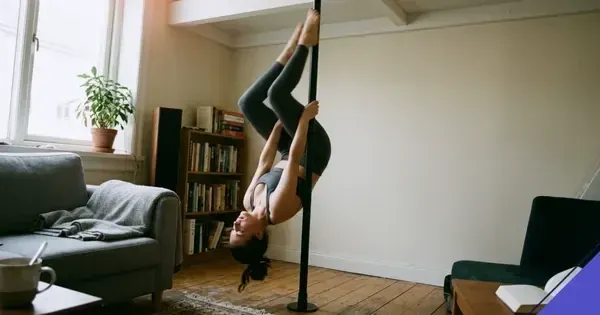
 Moves & TricksThree phases that build your first pole invert
Pole dance fitness: strength, flexibility and confidence in one workout
- Moves & TricksThree phases that build your first pole invert
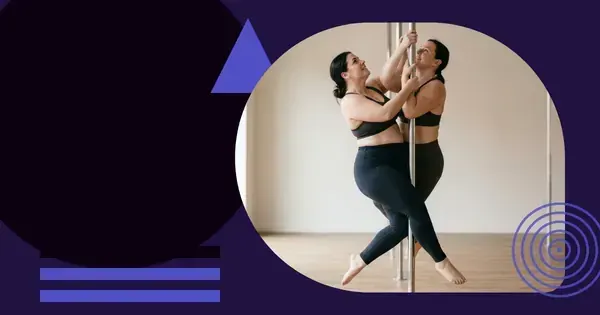 Getting StartedYou can pole dance at any weight – here's what actually matters for four move types
 Equipment & GearHow to Clean Your Pole in Four Simple Steps
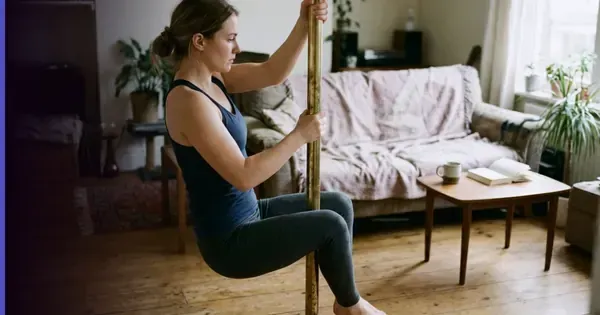 Technique & FormFour hand positions that fix your pole grip technique
 Equipment & GearChoosing pole diameter: 2 sizes that change how every move grips
 Getting StartedHow to start pole dancing at home: 4 setup steps before your first move
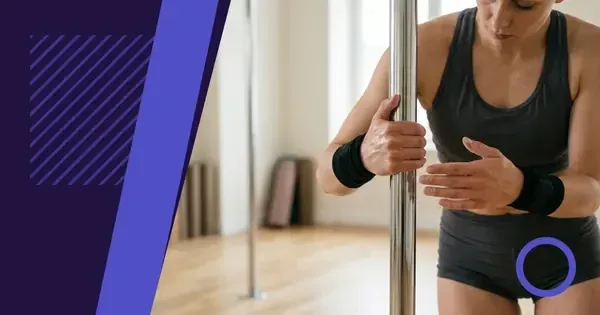 Technique & FormWhat to do when your hands sweat on the pole: 4 fixes that work mid-session
 Equipment & GearSpinning vs static pole: 2 modes that change how every move feels
 Health & SafetyHow to stop bruising from pole dancing: 3 positioning shifts that reduce impact
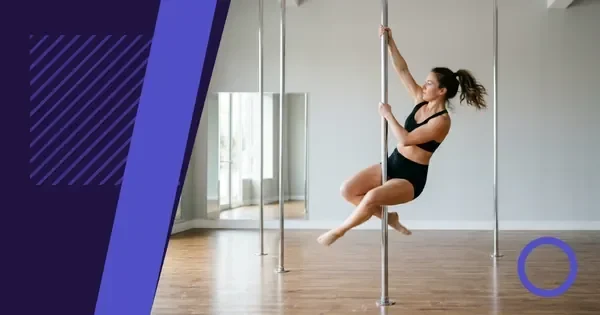 Moves & TricksThe fireman spin: 3 body positions that make it work
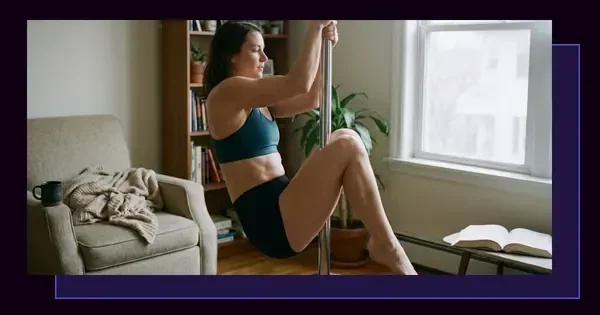 Training & ConditioningBuilding strength for pole dancing: 4 muscle groups you'll use in every move
 Equipment & GearWhat shoes to wear for pole dancing: 3 grip zones that decide
 Getting StartedWhat to wear for pole dancing: 5 grip zones that need bare skin
Getting Started
Equipment & Gear
Pages

Start with what you can do today. Pole dance fitness combines acrobatic movement, strength training and dance into a single discipline that works your entire body. It suits people at every fitness level, from first-timers learning basic grips to experienced athletes perfecting inverted holds. By the time you finish reading, you will understand how pole fitness works, what a session involves and the steps to take before your first class.
The foundation: what pole fitness builds
Pole fitness trains grip strength, core stability and upper-body power all at once. Each move demands coordination between muscle groups that rarely work together in conventional exercise. A basic climb engages your arms, shoulders, back, abdominals and legs in a single motion.
The discipline also develops flexibility through active stretching. Moves such as splits and leg extensions require range of motion under tension, which builds both mobility and control. Balance improves because every position on the pole tests your ability to centre your weight over a narrow vertical axis.
Confidence grows with competence. Mastering a spin or a hold you could not perform a month earlier provides tangible proof of progress. The social element matters too: group classes create a supportive environment where everyone is working through the same challenges.
Why it works as a full-body workout
Pole fitness recruits stabilising muscles that isolation exercises miss. Holding your body weight against gravity forces deep core engagement, while dynamic transitions between poses add a cardiovascular component. A single hour-long session can match the calorie burn of circuit training, with the added benefit of learning a skill.
Getting started: the first practical steps
Choose structured beginners' classes over attempting moves at home. A qualified instructor will teach you correct hand placement and body alignment from the start, which prevents injury and builds good habits. Most studios offer trial sessions that let you experience the discipline before committing to a course.
Wear clothing that exposes your arms and legs. Skin contact with the pole creates the friction needed for grip, so shorts and a vest top are standard. Leave jewellery and watches at home; metal can scratch the pole and cause discomfort during spins.
Warm up thoroughly before each session. Cold muscles tear more easily, and pole fitness places unusual demands on your shoulders and wrists. A proper warm-up includes joint rotations, light cardio and dynamic stretches for the hips and hamstrings.
- Find a local studio that offers beginner-level classes and read reviews from current students.
- Book a taster session to assess the teaching style and the studio's equipment.
- Invest in a pair of grip-soled shoes if you plan to train regularly; they aid with spins while you build skin grip.
- Set a realistic schedule, starting with one or two sessions per week to allow recovery time.
What happens in a typical class
Sessions follow a clear structure. The warm-up prepares your body for load-bearing movement. The instructor then demonstrates a new move or combination, breaking it into stages. You practise each stage with guidance, gradually linking them together. The session ends with a cool-down that includes stretching and breathing exercises.
Expect to repeat moves many times. Pole fitness rewards consistent practice; strength and technique develop in small increments. Frustration is normal when a move does not click immediately, but persistence brings results.
Common mistakes and how to avoid them
Rushing progression leads to injury. Each move builds on the one before it, and skipping stages leaves gaps in your technique. Master the fundamentals before attempting advanced holds, even if others in the class are progressing faster.
Gripping too hard with your hands exhausts your forearms and limits your stamina. Many moves rely on pressure from your legs and core rather than arm strength alone. Listen when your instructor corrects your grip; efficient technique conserves energy.
Neglecting rest invites overuse injuries. Tendons and ligaments need time to adapt to the stress of pole work. If your wrists, elbows or shoulders ache between sessions, take an extra day off and speak to your instructor about modifying your training intensity.
Recognising when to scale back
Sharp pain during a move is a signal to stop, not push through. Dull muscle fatigue is expected; acute joint pain is not. Bruising on your legs and arms is common as you learn new grips, but swelling or pain that persists for days warrants a break and possibly a visit to a physiotherapist.
Choosing the right training environment and approach
Studio quality varies. Look for clean, well-maintained poles made from stainless steel or brass, not chrome-plated versions that corrode. The ceiling height should allow for inverted moves without your head nearing the floor. Crash mats around each pole add a safety margin during attempts at new tricks.
Instructor credentials matter. Certification from a recognised pole fitness body indicates formal training in technique and safety. Ask about the instructor's background and whether they carry liability insurance. A good teacher adapts moves to suit different body types and fitness levels rather than enforcing a single method.
| Training option | Best for | What to check |
|---|---|---|
| Group classes | Beginners and social learners | Class size, instructor attention, progression structure |
| Private sessions | Focused skill-building or injury rehabilitation | Hourly rate, cancellation policy, instructor specialism |
| Home practice | Experienced students supplementing studio work | Pole stability, ceiling strength, adequate floor space |
| Online tutorials | Learning theory between in-person sessions | Instructor reputation, video quality, alignment with your current level |
Home poles require secure installation. A pole that shifts mid-spin can cause serious injury. Hire a professional to assess your ceiling joists if you plan to install a permanent pole, and test the pole's stability with basic spins before attempting inverted moves.
Matching training style to your goals
Decide whether you are training for fitness, artistry or competition. Fitness-focused classes emphasise calorie burn and muscle conditioning, with less time spent on choreography. Dance-style pole blends movement with music and floor work. Competition preparation involves drilling specific moves and building routines under time pressure. Most people start with general fitness classes and specialise later.
Where to go next: building a sustainable practice
Track your progress in a simple log. Note which moves you attempted, how they felt and what your instructor recommended working on. Patterns emerge over weeks: you will see which muscle groups need more attention and which techniques click quickly for you.
Supplement pole training with complementary exercise. Yoga improves flexibility and body awareness. Strength training builds the pulling power needed for advanced moves. Even brisk walking aids recovery by promoting blood flow without adding load to fatigued muscles.
Join the wider pole community. Many studios host social events, showcases and workshops with guest instructors. Watching others perform expands your sense of what is possible and exposes you to different movement styles. Online forums and social media groups offer advice on specific techniques and equipment choices.
Set milestones that motivate you. Achieving your first unassisted climb, holding an inverted pose or completing a full routine gives you concrete targets to work towards. Celebrate each one, then set the next. Pole fitness rewards patience and consistency more than raw athleticism.
Start this week
You do not need to be strong or flexible before your first class. Begin where you are, and improvement will follow.
Research three local studios and compare their beginner offerings. Book a taster session at the one with the best reviews. Clear two evenings in your weekly schedule for training, allowing at least one rest day between sessions. Write down one specific goal for your first month, whether that is mastering a fireman spin or simply attending every class you book.
Frequently asked questions
Do I need to be fit before starting pole fitness?
No. Beginner classes are designed for all fitness levels, and you will build strength and flexibility as you train. Instructors adapt moves to suit your current ability.
How long does it take to learn a basic spin?
Most people learn a fireman spin or a chair spin within their first few sessions. Progress depends on how often you train and how quickly your body adapts to gripping the pole.
Will pole fitness help with weight loss?
Pole fitness burns calories and builds lean muscle, both of which support weight management. Combined with balanced eating, regular training can contribute to fat loss and improved body composition.
Is pole fitness only for women?
No. Pole fitness suits anyone regardless of gender. Men, women and non-binary people train together in most studios, and the discipline benefits all body types.
What injuries are common in pole fitness?
Overuse injuries to the wrists, shoulders and lower back occur when people progress too quickly or skip warm-ups. Bruising on the legs and arms is normal as you learn new grips, but it fades with regular training.
Can I practise at home without a studio pole?
You can work on conditioning exercises such as planks, pull-ups and leg lifts at home to build strength between classes. Installing a home pole is possible but requires secure ceiling fixings and enough space to move safely.