You can pole dance at any weight – here's what actually matters for four move types
 Save
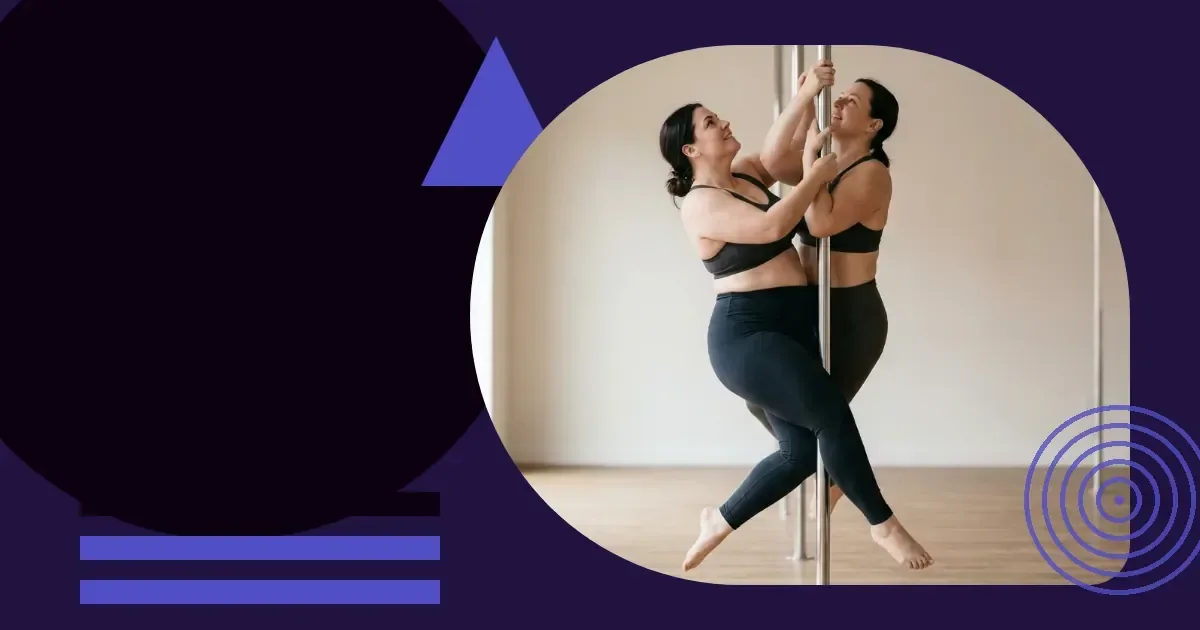
Yes, you can pole dance at any weight. Most moves depend on grip, body position and technique rather than how much you weigh, and poles themselves support far more than any single person's body weight. What changes is which progressions you start with and how you build strength for moves that do ask you to lift yourself. Cumbria Pole Art walks you through the moves open to you now, the ones you'll work towards, and the technique shifts that make the difference.
Poles hold you – it's the technique that needs building
A properly installed pole supports weight well beyond what one person brings to it. Chrome, brass and stainless steel poles are tested to hold several hundred kilograms when mounted to a ceiling joist or between floor and ceiling with the right pressure. The pole itself is not the limiting factor.
What matters is how you engage with it. Grip comes from contact area and friction, not from pressing harder with smaller hands or legs. Larger surface area can mean better grip on spins and holds once you know where to place your body. Moves that feel impossible at first often open up when you shift your weight distribution or change the angle of your approach.
Moves that work from your first session
Many foundational moves ask for controlled movement and balance rather than lifting your full weight off the ground. You can start with these and build confidence while your grip and core strength develop.
- Spins that stay grounded: the fireman spin, chair spin and front hook keep at least one foot on the floor as you rotate around the pole, using momentum rather than sustained lifting.
- Pole sits and leg hangs: these lock your legs around the pole and let your upper body relax, distributing weight across a larger contact area instead of holding yourself up with arms alone.
- Floor work and transitions: choreography that moves around the pole, slides and body rolls build fluidity and stage presence without requiring you to be airborne.
- Static holds low to the ground: poses where your feet or knees stay in contact with the floor let you practise engagement and alignment before you add height.
The progressions that ask for more strength
Inversions and climbs require you to lift your body weight using your arms, core and grip. These are skills you work towards, not moves you're expected to nail in your first month.
Building the strength takes time for everyone. Larger bodies need more pulling power to invert, and that means spending longer on conditioning exercises off the pole – pull-ups, dead hangs, planks and leg raises all prepare the muscles you'll use. Strength training for pole dancing covers the muscle groups every move draws on.
When you're ready to start, you can modify. Use a lower grip point so you're inverting closer to the floor. Break the movement into stages: lift your hips, then tuck your knees, then extend. A spotter or a crash mat gives you confidence to commit without worrying about the drop.
Technique adjustments that make moves accessible sooner
Small changes in how you approach a move often matter more than raw strength. Here's what to adjust as you learn.
| Challenge | Adjustment | Why it helps |
|---|---|---|
| Slipping during spins | Increase contact area – press more of your inner thigh or torso against the pole | Friction rises with surface area; more skin on the pole means better grip without squeezing harder |
| Struggling to lift into a climb | Start with your hands lower and push with your bottom foot as you pull with your arms | Pushing and pulling together share the load; you're not relying on upper body alone |
| Can't hold a pole sit | Cross your ankles and squeeze your knees towards each other | Locking your legs creates a stable platform; the pole can't slip through when your knees are tight |
| Hands slide on basic holds | Dry your hands, use a light grip aid, and check your pole is clean | Moisture and residue kill friction; keeping your pole clean gives you the tack you need |
What you wear changes how much skin grips the pole
Pole dancing asks for bare skin on the parts of your body that grip the pole – typically your inner thighs, the backs of your knees, and your torso for certain moves. Leggings and long sleeves cover the surfaces you need exposed, so most people wear shorts and a sports bra or crop top.
If you're not comfortable with that much skin on show, you can still practise floor work, low spins and any move that doesn't rely on thigh or torso grip. As you build confidence, you might find you're willing to wear less in a private session or at home. There's no universal dress code; what matters is having enough exposed skin for the moves you're working on. What to wear for pole dancing walks through the grip zones that need to be bare.
Your progression plan – four steps you can start this week
- Find a beginners' class or instructor who works with people of all sizes, and tell them you're new. A good teacher will offer modifications and won't push you into moves you're not ready for.
- Spend your first sessions on spins that keep one foot on the floor and on building your grip with pole sits. These give you wins early and let you feel how the pole responds to your weight.
- Add conditioning exercises at home: dead hangs from a pull-up bar, planks, and glute bridges all build the pulling and core strength you'll need later.
- Track what you can do each week rather than comparing yourself to others in the room. Pole dancing progress is individual, and every body has its own timeline.
When to expect moves to click
Everyone's timeline is different, and weight is only one variable among several – your starting strength, flexibility, how often you train, and whether you've done any grip-based activity before all play a part. Some people invert within months; others take a year or more.
What you can rely on is that consistent practice builds the strength. If you're training twice a week and adding conditioning on the side, you'll notice your grip improving within a month and your endurance increasing soon after. The moves that felt out of reach at the start become warm-up exercises once your body adapts.
Patience is the skill here. Pole dancing rewards people who show up and do the work, regardless of where they start.
The questions people ask before their first session
Will the pole break? No. Poles are engineered to hold far more weight than one person, and if yours is installed correctly, it won't budge.
Do I need to lose weight first? No. Starting now builds the strength and confidence you'll use in every move. Waiting doesn't make the learning curve any gentler.
Will I be the biggest person in the class? Possibly, possibly not – and it won't matter. Pole studios attract people of all shapes, and most are focused on their own practice rather than watching others.
What if I can't do the moves everyone else is doing? You won't be expected to. Beginners' classes teach progressions, and instructors offer modifications. Everyone in the room was once where you are now.
#Beginners #Strength #Grip #Inversions
Download PDF: Your first month of pole dancing PDF, 29 KB
Further reading
Frequently asked questions
Can a pole hold someone who is overweight?
Yes. Properly installed poles are tested to support several hundred kilograms and will hold any single person's weight without issue. The pole itself is not the limiting factor in what moves you can do.
Do you have to be skinny to do pole dancing?
No. Most pole moves depend on technique, grip and body position rather than body weight. Many spins, holds and floor work are accessible from your first session, and strength-based moves like inversions are skills you build towards over time.
What pole moves can I do if I'm plus size?
Spins that keep one foot on the floor, pole sits, leg hangs, floor work and low static holds all work from your first session. Inversions and climbs require more pulling strength and take longer to build, but they're achievable with consistent conditioning and practice.