The fireman spin: 3 body positions that make it work
 Save
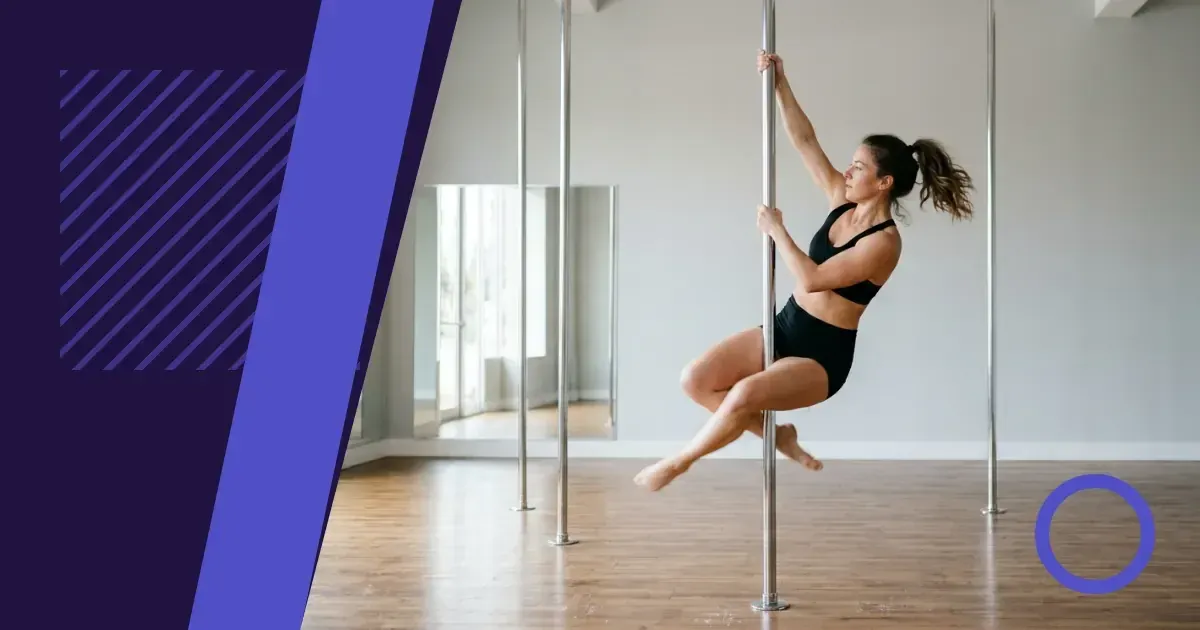
The fireman spin is a foundational pole move where you step into the pole, hook one leg around it and spin while your body swings out horizontally. It introduces you to controlled momentum and teaches you how your grip, leg placement and core tension work together. Cumbria Pole Art walks through the entry, the hold and the exit so you know what each part of your body is doing.
Why the fireman spin is taught first
Most instructors start with this spin because it keeps both hands on the pole throughout. You stay close to the ground, so falling feels less daunting. The move asks your body to do one thing at a time: step, hook, lean, spin. That sequence builds the confidence you need before you attempt moves where your hands leave the pole or your hips rise above your head.
The fireman also trains your inside leg to bear weight while hooked. That leg position appears in dozens of intermediate spins and holds, so mastering it here saves you time later.
The entry: step and hand placement
You approach the pole in spin mode with a walking step. Your outside hand grips the pole at head height or slightly above; your inside hand sits lower, around chest or rib height. The gap between your hands stabilises your torso when you lean back.
As you step past the pole, your inside leg swings forward and hooks around it. The back of your knee or the top of your calf presses into the pole, and your foot crosses over to the outside of your supporting leg. Your supporting leg stays on the floor until the spin has started, then lifts to meet your hooked leg or extends behind you.
Body position during the spin
Once your inside leg hooks and your outside leg leaves the floor, you lean back from the pole. Your hips push away, your shoulders stay square, and your core holds your body in a near-horizontal line. The pole runs diagonally across your torso, from your inside armpit down to your hooked knee.
Your arms stay firm but not rigid. If you bend your elbows too much, you'll pull yourself into the pole and lose momentum. If you lock them completely, the spin feels jerky. A slight bend with active shoulders gives you the control to adjust mid-spin.
Your free leg—the one that isn't hooked—can point straight back, cross over the hooked leg, or bend at the knee. Beginners often let it dangle at first; as you gain confidence, you'll extend it to create a cleaner line.
The exit: timing and balance
The fireman spin slows naturally as friction takes over. When you feel the momentum drop, bring your outside leg down first and let your foot touch the floor. Your hands stay on the pole until both feet are grounded. Then release your inside leg and step away.
Trying to dismount while the pole is still spinning fast can wrench your shoulder or twist your knee. Let the spin finish on its own. If you need to stop earlier, press the sole of your outside foot gently against the floor to brake.
Common mistakes and how to fix them
Many people grip too tightly with their hands and forget to engage their hooked leg. The leg hook does more to hold you than your hands do. If your knee or calf isn't pressed firmly into the pole, you'll slide down or spin unevenly.
Another frequent issue is collapsing the chest. When your shoulders roll forward, your body folds in half and the spin stops. Keep your chest open and your gaze forward or slightly upward.
Some beginners swing their free leg wildly to generate speed. The spin's momentum comes from your initial step and your lean, not from kicking. A thrashing leg throws off your balance and makes the exit harder.
Strength and flexibility requirements
The fireman spin doesn't demand the upper-body strength of an inversion or the flexibility of a split. You need enough grip to hold your weight with bent arms, enough core stability to keep your torso from sagging, and enough leg strength to hook and hold the pole between your knee and foot.
If you can hang from a bar for ten seconds and hold a plank for thirty, you have the baseline. The spin itself builds the specific strength you'll use in more advanced moves. For a fuller look at how each muscle group supports your practice, read our guide to building strength for pole dancing.
Variations and progressions
Once the basic fireman feels secure, you can add a regrasp: as you spin, release your top hand, let it trail behind your body, and catch the pole again on the far side. This transitions you smoothly into other spins or a pole sit.
You can also enter from a small jump instead of a walk, or extend your free leg into a straddle. Each variation asks for slightly more control and timing, but the core position—hooked leg, open chest, firm arms—stays the same.
What to wear and what surface works best
You want bare skin on your inside leg from mid-thigh to ankle. Leggings or joggers will cause you to slide off the pole before the spin begins. Shorts that end above mid-thigh work well. Your hands can be bare or lightly chalked, depending on the pole finish and your natural grip. Our article on what to wear for pole dancing explains which areas need skin contact and why.
Footwear depends on your preference. Many people spin barefoot to feel the floor and control their exit. Others wear pole shoes with a grip sole for a cleaner line and a bit of extra height. Heeled shoes are fine once you're confident with the entry and exit; avoid them while you're still finding your balance.
How to practise safely
Set a crash mat beneath and around the pole until the move feels automatic. The fireman spin sits low to the ground, so serious injury is rare, but a mat cushions a clumsy dismount and gives you the confidence to lean back fully.
Warm up your shoulders, wrists and ankles before you start. A few arm circles, wrist rolls and calf raises prepare the joints you'll load during the spin. If your hands are slipping, wipe the pole with a microfibre cloth and dry your palms. If you're gripping too hard and your forearms burn, take a break and shake out your hands.
Practise on both sides from the beginning. Your dominant side will feel easier at first, but training your non-dominant side early prevents imbalance and opens up more combinations later.
Steps to try today
- Stand beside the pole and place your outside hand at head height, inside hand at chest height.
- Step forward with your inside leg and hook it around the pole, pressing the back of your knee or upper calf firmly into the pole.
- Lift your outside leg off the floor and lean back, letting your hips push away while your chest stays open.
- Hold the spin with firm arms and an engaged core until the momentum slows.
- Bring your outside foot down first, wait for both feet to touch the floor, then release your inside leg and step away.
#Spins #Beginners #Grip #Static mode
Download PDF: Fireman spin checklist PDF, 27 KB
Further reading
Frequently asked questions
How do you hook your leg in a fireman spin?
You step forward with your inside leg and press the back of your knee or the top of your calf into the pole. Your foot crosses over to the outside of your supporting leg, creating pressure that holds you on the pole as you spin.
What is the easiest pole spin for beginners?
The fireman spin is the most common first spin because both hands stay on the pole, you remain low to the ground, and the movement breaks into clear steps. It builds the foundation for spins that require more strength or coordination.
Do you need to be strong to do a fireman spin?
You need enough grip to hold your weight with slightly bent arms and enough core strength to keep your torso from sagging. If you can hang from a bar for ten seconds, you have the baseline. The spin itself builds the specific strength you'll use later.
How do you stop a fireman spin safely?
Let the spin slow naturally, then bring your outside foot down first. Keep both hands on the pole until both feet are on the floor. If you need to stop early, press your outside foot gently against the floor to brake.
What should you wear for a fireman spin?
You need bare skin on your inside leg from mid-thigh to ankle so the pole can grip. Shorts that end above mid-thigh work well. You can spin barefoot or in pole shoes, depending on your preference.
Can you do a fireman spin on a static pole?
The fireman spin is designed for spin mode, where the pole rotates. On a static pole, you can perform a similar move, but it becomes a hold rather than a spin and requires more upper-body strength to support your weight without momentum.