What shoes to wear for pole dancing: 3 grip zones that decide
 Save
You don't need shoes to pole dance. Most fitness-based pole is done barefoot, because the tops of your feet, your arches and your ankles all grip the pole during climbs, sits and foot hooks. Cumbria Pole Art focuses on what works for your body and your goals, so the choice of footwear—or none—comes down to the style you're learning and how you want to move.
When bare feet give you the grip you need
Pole fitness, athletic pole and most beginner classes are taught barefoot. Your feet act as contact points: you hook them around the pole during inversions, press the tops of your feet into it during climbs, and use your arches to lock positions. Shoes block that skin-to-pole contact, which makes many foundational moves impossible or unsafe.
If you're building strength, learning spins on static mode or working towards your first inversion, bare feet let you feel the pole and adjust your grip instinctively. The soles of your feet stay free to flex, and you can point your toes without a platform getting in the way.
How heels change the way you move
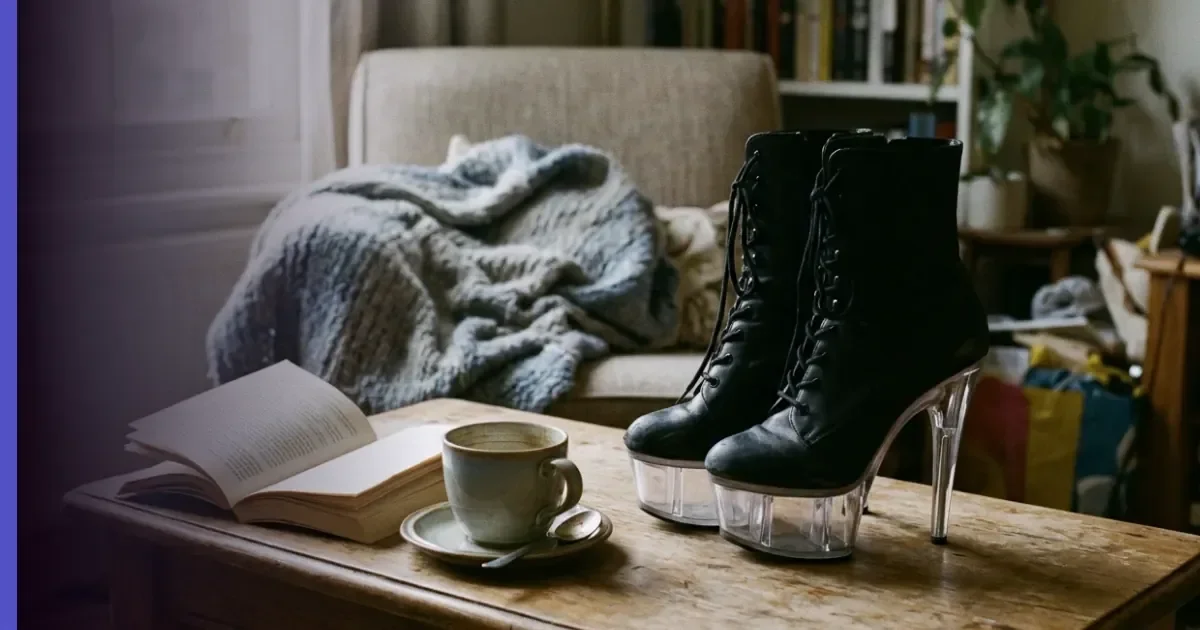
Platform heels—often called pole shoes or Pleasers after a popular brand—are standard in exotic pole, pole dancing performances and some choreography-focused classes. They add height, lengthen the leg line and shift your centre of gravity, which changes the way spins, floor work and transitions feel.
Platform height typically ranges from four to eight inches. A taller platform makes you work harder to stay balanced, but it also exaggerates leg extension and gives floorwork a different aesthetic. If you're new to heels, start with a lower platform and a chunky heel—easier to balance on than a stiletto, and less strain on your ankles during floor transitions.
What Pleasers are and why they matter
Pleasers are a brand of platform heel designed for dancers. They have a grippy sole, ankle straps that stay put during movement, and platforms that distribute weight more evenly than fashion heels. Other brands exist, but the name is used generically in many pole studios the way "Hoover" is used for any vacuum cleaner.
You don't need them for pole fitness. You do if you're taking an exotic pole class or learning choreography that includes floorwork, because the teacher will build combinations that assume you're wearing them.
Three zones where footwear blocks your grip
Understanding where your feet touch the pole helps you decide when shoes work and when they don't. Here are the three main contact zones:
| Zone | Used in | Blocked by shoes |
|---|---|---|
| Top of foot | Climbs, some inversions | Completely |
| Arch | Pole sits, leg holds | Completely |
| Ankle and calf | Foot hooks, ankle grip moves | Partially—depends on strap placement |
If your class involves climbs or sits, bare feet are necessary. If it's all spins, floorwork and transitions, heels won't stop you—and they'll change the way those moves look and feel.
Choosing your first pair of pole heels
If you've decided to try heels, here's how to pick a pair that won't trip you up or hurt your practice.
- Start with a six-inch platform and a chunky heel, not a stiletto—easier to balance on and less likely to roll your ankle.
- Check that the ankle strap fastens securely and sits above your ankle bone, so it doesn't slide during floorwork.
- Look for a textured or rubber sole—you need grip on the studio floor, not a slippery plastic bottom.
- Wear them around the house for ten minutes before your first class, so you know how they affect your balance and where they rub.
Breaking in new heels without blisters
New pole shoes are stiff. Wear thick socks and walk around in them for short bursts over a few days. The straps will soften, and you'll find out which buckle holes work before you're halfway through a warm-up with raw ankles.
When studios ask you to bring both
Some studios run mixed-level or choreography classes where part of the session is barefoot conditioning and part is heeled floorwork. If the class description mentions exotic pole or performance prep, assume you'll need heels for at least half of it. If it says pole fitness, pole athletics or strength conditioning, you won't.
Ask the instructor before your first class. Most studios list what to bring on their timetable, and if you turn up to a heels class barefoot, you'll spend an hour watching moves you can't safely replicate.
What about grip socks or foot thongs
Grip socks cover your sole but leave your toes and the tops of your feet exposed. Foot thongs—also called footundeez—are minimal coverings that protect your arch but leave most of your foot bare. Both are used by dancers with foot injuries, sweaty feet or hygiene concerns, and neither gives you as much grip as bare skin.
If you're using them, check with your instructor. Some moves rely on the friction between your whole foot and the pole, and even a thin layer of fabric changes that. For reference, what to wear for pole dancing covers the other five grip zones where bare skin matters.
Download PDF: Pole footwear decision checklist PDF, 28 KB
Further reading
Frequently asked questions
Do you have to wear heels for pole dancing?
No. Most pole fitness and strength-based classes are done barefoot, because your feet need to grip the pole during climbs and sits. Heels are used in exotic pole and performance choreography, where floorwork and leg lines matter more than foot grip.
What are Pleasers in pole dancing?
Pleasers are a brand of platform heel designed for dancers, with grippy soles, secure ankle straps and platforms that distribute weight evenly. The name is often used for any pole shoe, regardless of brand.
Can you pole dance barefoot as a beginner?
Yes. Beginners usually train barefoot so they can learn climbs, spins and inversions with full foot contact. Bare feet give you better grip and help you feel where your body is on the pole.