Taster sessions: what you'll do in your first hour
 Save
A taster session gives you one hour on the pole before you commit to a course or membership. You'll learn two or three beginner moves, meet an instructor and find out whether pole dance fitness suits your body and your schedule. Cumbria Pole Art walks you through what happens in a typical session and what you need to bring.
A taster session introduces the pole, the grip and the first moves
You'll spend the first ten minutes warming up: shoulder rolls, wrist stretches and a few squats to prepare the muscles you'll use most. The instructor then demonstrates pole grip—how your hands and inner forearms hold the metal—and you practise walking around the pole in both directions. Most sessions teach a fireman spin and a basic climb or a pole sit, depending on what your arms and core can manage on the day.
The pace is slower than a regular class because the instructor stops to explain why each position works. You'll hear about points of contact, which parts of your body share the load, and how to step down safely when a move stops feeling secure. Nobody expects you to invert or hold your weight for long; the goal is to finish the hour with a sense of what pole dancing asks of your body.
Sessions run between one hour and ninety minutes
Most studios schedule taster sessions for one hour, though some extend to seventy-five or ninety minutes when the group is small. You'll spend roughly half that time on the pole itself; the rest goes to the warm-up, a short cool-down and any questions you want to ask. Expect to leave with sore hands, forearms and inner thighs—the skin and muscles that grip the pole will feel worked even after a short session.
You'll need bare skin on your legs and sometimes your midriff
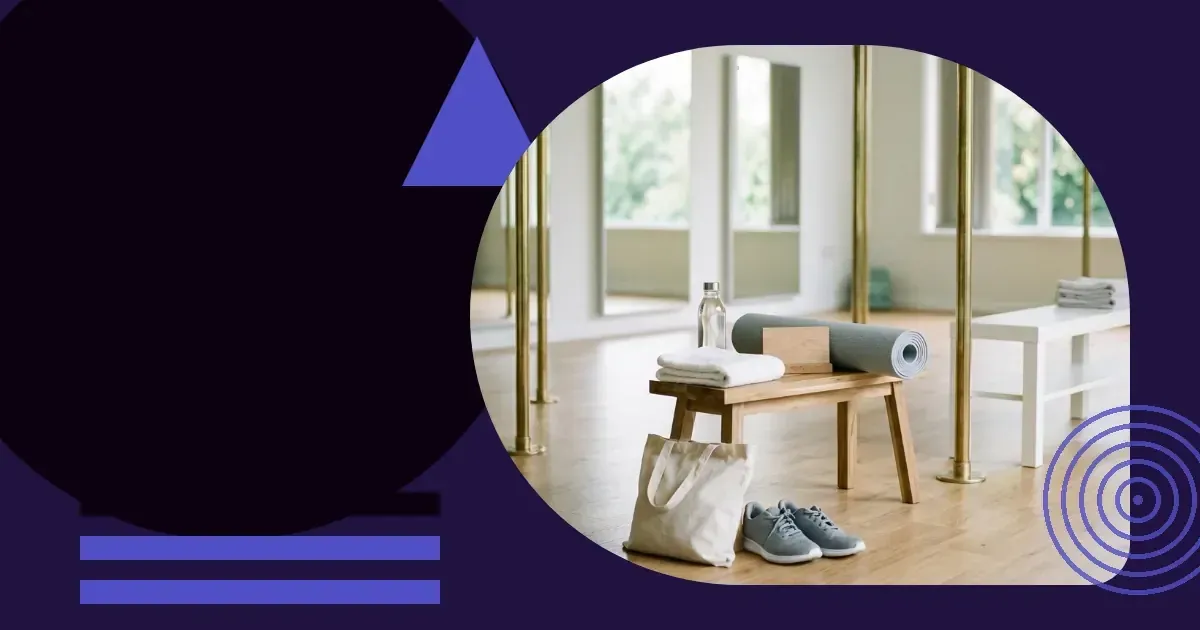
Grip comes from skin contact, so shorts are standard—the shorter the better for your thighs and the backs of your knees. A vest or sports bra works for your upper body; some moves use the side of your torso for grip, so a cropped top gives you more options. Bring a bottle of water and a small towel to wipe the pole between turns. Studios provide mats and cleaning spray; you provide the clothes that let your skin do its job.
Worth remembering: jewellery scratches the pole and snags on clothing, so take off rings, bracelets and anything that hangs. If you have long hair, tie it back—it will stick to your neck and shoulders once you start sweating.
Footwear depends on the studio's approach
Some studios ask you to work barefoot from the start; others let you wear trainers for the warm-up and the walking exercises, then switch to bare feet for spins and holds. Heeled shoes exist for pole dancing, but you won't use them in a taster session. Ask when you book if you're unsure what to bring.
Most sessions cost between ten and twenty-five pounds
Prices vary by region and studio size, with city venues typically charging more than independent instructors in smaller towns. Some studios deduct the taster fee from a course if you sign up within a set number of days, though that's not universal. Pay when you book or on arrival, depending on how the venue handles registration.
You'll share the session with up to six other beginners
Group sizes are kept small so the instructor can watch your form and correct your hand placement. You'll rotate between poles, usually two or three people to each pole, with one person working while the others rest or watch. That rotation gives your hands and arms time to recover between attempts; pole dancing works muscles in short, intense bursts, and beginners tire quickly.
If the idea of working in a group feels uncomfortable, ask whether the studio offers private taster sessions. Some do, though the price is higher and availability depends on the instructor's schedule.
What happens after the session ends
The instructor will tell you what courses or drop-in classes are available, along with their structure, cost and schedule. You're under no obligation to book immediately, and most studios expect you to go away and think it over. If you want to continue, you'll move into a beginner course or join a mixed-ability class where moves are taught in progressions—easier and harder versions of the same shape, so you can work at your own pace.
In practice: if you leave the session feeling interested but unsure whether your body can handle regular training, sign up for a short beginner course of four to six weeks rather than committing to a full term. That gives you enough time to build foundational strength without locking you into a long block of classes.
Steps to book and prepare for your first taster session
- Search for pole dance studios or independent instructors within your travel range and compare their taster session prices, times and group sizes.
- Book a session at least a week ahead so you have time to prepare the clothing and clear your schedule; weekend and evening slots fill quickly.
- Pack shorts, a vest or sports bra, a water bottle and a small towel the night before, and remove all jewellery before you leave home.
- Arrive ten minutes early to sign any required paperwork, meet the instructor and settle into the space before the warm-up begins.
For more on what you'll wear once you start training regularly, read what to wear for pole dancing. If you're thinking about setting up at home instead of joining a studio, how to start pole dancing at home covers the equipment and space you'll need.
Disclaimer: This page provides general information about pole dance fitness for readers exploring the subject. Cumbria Pole Art is an independent information portal and does not sell goods, services, instruction or memberships of any kind.
Frequently asked questions
Do I need to be fit before I try a taster session?
No. Taster sessions are designed for people with no pole experience and no specific fitness level. The moves are broken down into small steps, and the instructor adjusts the difficulty based on what your body can manage on the day.
Will I be able to do a spin or a hold in my first session?
Most people manage a fireman spin and a basic pole sit or a low climb in their first hour, though how far you get depends on your grip strength and confidence. You won't invert or perform advanced holds; the session focuses on learning how the pole works and how your body grips it.
Can I bring a friend to the same taster session?
Yes, provided the session has space for both of you. Booking together often helps if you're nervous about trying something new, and you'll be able to share a pole and take turns. Check availability when you book, as some sessions have a cap of four to six participants.